


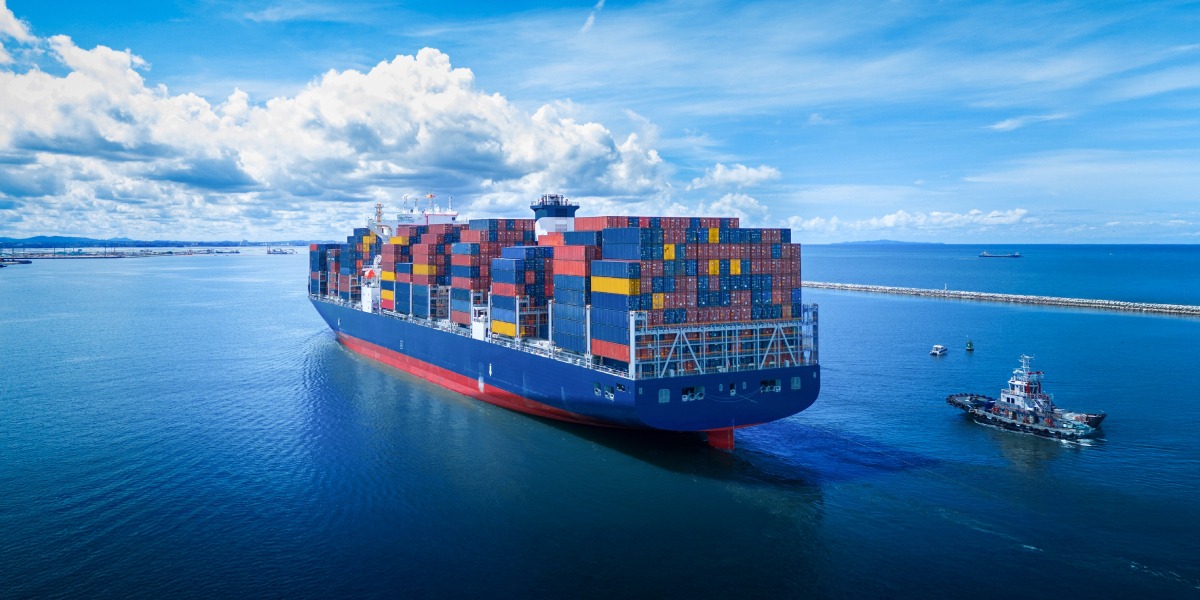
Air freight gets all the attention when speed is a factor. Fair enough. But speed has a cost, and for most businesses moving real volume, that quickly breaks the budget. Run the numbers honestly, and sea freight services come out ahead every time. Most practical option. Most scalable. It is the most cost-effective for moving goods across the world. That has not shifted in 2026. The argument for ocean freight has actually gotten stronger.
The industry has been through it. Rate spikes, supply chain shocks, Red Sea tensions, and tariff swings across major corridors. Throughout all of that, sea freight services kept global trade moving. That kind of track record is nothing, and it should factor into how you think about logistics strategy going forward.
Understanding Sea Freight Services
Sea freight services cover everything involved in moving cargo by ocean, including booking, documentation, port handling, customs clearance, and delivery coordination. Every step of an international ocean shipment falls under that umbrella.
The model holds at any scale. A small manufacturer moving one container from Mumbai to Rotterdam and a global business running hundreds of TEUs monthly across the Asia-Pacific are working with the same core infrastructure. What changes is the complexity. Carrier relationships, documentation layers, risk management, and contingency planning: the bigger the operation, the more those things matter.
Roughly 80% of global trade by volume moves by sea. That figure has stayed consistent for decades and shows no real sign of changing. Sea freight services serve as the vital link between producers and markets for raw materials, finished goods, industrial equipment, and consumer products. No other transport mode gets close to that kind of reach.
Why Sea Freight Still Dominates in 2026?
Sea freight maintains its global dominance primarily due to its superior economics, which are driven by three core factors.
- Cost advantage
Rates for sea freight shipping stay well below what air charges for the same volumes, and that’s held even after the market turbulence of the past few years. For businesses keeping a close eye on margins, that difference adds up faster than most expect.
- Capacity at scale
A single container vessel moves upwards of 20,000 TEUs per voyage. Think about what that means practically: large volumes shifted in one movement, cargo pulled from multiple suppliers, and per-unit costs brought down in ways no other international mode gets close to matching.
- Cargo coverage
Sea cargo freight covers what air cannot at any real scale. Bulk commodities, oversized industrial kits, and hazardous materials, ocean freight has no practical alternative. Air handles roughly 1% of global trade by volume. Land, rail, and sea take the rest. In the international routes, ocean does most of that work.
Together, these three make the case better than any rate sheet ever could.
The 2026 Shipping Landscape: Challenges and Opportunities
The fundamentals hold. The environment around them, though, is a different story.
Schedule reliability has been sitting in the low 60% range this year. Not a great number. But most experienced logistics partners have built contingency planning into how they work, and shippers whose sea freight services have pushed their lead times out have absorbed it. Manageable disruption. The core case stays intact.
The rest of it deserves a straight look. Red Sea disruptions are still sending vessels around the Cape of Good Hope, adding 10 to 14 extra days on Europe-Asia legs, and fuel costs are higher as a result. US-China tariff swings have rattled sourcing patterns. Plenty of shippers are now splitting origins across Southeast Asia and India just to spread that exposure.
Capacity picture: global container availability looks set to grow around 5% this year, ahead of demand on several corridors. That gives shippers some rate leverage, but only the ones with solid carrier relationships and the data to use them properly. None of this breaks the fundamental argument for sea freight services. What it does do is make the logistics partner you work with considerably more important than it was a few years ago.
Container Types and What They Mean for Your Cargo?
Getting sea freight container sizes right from the start saves money and prevent problems downstream. The choice of unit shapes the economics of every shipment, not a detail to leave until the last minute.
- 20-foot dry container (TEU)
Best for dense, heavy cargo, metals, machinery, and cement. Around 33 cubic meters internally. The base unit for measuring ocean freight capacity globally.
- 40-foot dry container (FFE)
The go-to for high-volume general cargo. Moves more volume than weight. Available on every major trade lane.
- 40-foot High Cube
That extra foot of height makes a real difference for bulky, lightweight goods and tall pallets. Now, the most commonly used container type is in service worldwide.
- Reefer containers
Temperature-controlled for perishables, pharma, and anything climate-sensitive. Available in 20ft and 40ft. - Open top and flat-rack containers
Open-top and flat-rack containers handle oversized cargo that won’t fit through a standard door. Heavy machinery, construction materials, project freight,
Dimensions stay consistent across carriers under ISO 668:2020. What shifts are availability, pricing, and if the unit actually suits the shipping. Worth sorting that before the booking gets confirmed.
The Role of a Sea Freight Logistics Partner
Two businesses shipping similar volumes on the same routes can end up with very different results. The gap almost always comes down to who’s running the logistics.
A strong partner in sea freight services brings carrier access that most individual shippers simply cannot build on their own. Negotiated rates, allocation priority when capacity gets tight, and visibility that stops exceptions from quietly becoming crises. Documentation, too, bills of lading, customs filings, and certificates of origin are handled with enough precision that port delays and demurrage charges don’t start eating into margins before anyone notices.
And beyond the day-to-day, experienced partners help businesses think through freight strategy.
Which lanes make sense at current rates? Does consolidation beat a full container on this route? How should lead times shift given reliability on a specific corridor right now? Good questions that deserve real answers.
For businesses running supply chains across Asia, the Middle East, and Europe, managing compliance across jurisdictions at the same time, that kind of support covers ground that most in-house teams were never set up to handle on their own.
Choosing the Right Sea Freight Partner
The criteria here matter more than many shippers give them credit for. A few things worth getting right:
Carrier access: Real relationships with the carriers on your core routes, not just reselling spot capacity with a margin built in.
Documentation depth: Customs errors cost money and time. Proper in-house knowledge of destination requirements, import regulations, and filing timelines keeps that risk off the table.
Visibility and communication: Tracking that works in real time, proactive heads-up on exceptions, and a clear point of contact when something goes wrong. That’s the standard, not a premium feature.
Cargo-specific knowledge: Container selection, reefer handling, and project cargo these need people who actually know the specifics. Generalist forwarders often don’t.
The right sea freight services partner does more than place bookings and share a tracking link. When things go sideways, and in 2026, they will do more than most logistics budgets allow for; they are the ones holding the line on your supply chain.
The Outlook for Sea Freight Services
Sea freight services keep moving forward. Decarbonization has real momentum now, major carriers are putting serious capital into LNG, methanol, and ammonia vessels, and regulatory pressure on emissions keeps building. For businesses with , tracking and reporting ocean freight carbon output will become standard practice. Carriers are building the data infrastructure to support that.
What won’t change is where sea freight services sit in global logistics. This mode moves the world’s goods. Has done for centuries. In 2026, through all the complexity and disruption, it remains the most reliable, scalable, and cost-effective answer to moving cargo across borders at volume. That position holds. With most businesses having serious supply chains to manage, building a strategy around them still makes sense.
FAQs
Q. What is sea freight shipping and how does it work?
Ans: It is the movement of goods via ocean vessels, usually in standardized containers. The process involves booking space with a carrier, navigating export/import customs, and managing transit between ports. Whether for a single box or hundreds of containers, it is the primary method for global trade.
Q. What is the difference between FCL and LCL in sea freight logistics?
Ans: FCL (Full Container Load) means your cargo occupies the entire unit, offering faster transit and less handling. LCL (Less than Container Load) involves sharing space with other shippers, which is more cost-effective for smaller volumes that don’t fill a full container.
Q. What sea freight container sizes are commonly used?
Ans: The 20-foot (approx. 33 $m^3$) and 40-foot (approx. 67 $m^3$) dry containers are the industry standards. Variations include “High Cubes” for extra height, “Reefers” for temperature-controlled goods, and “Flat-racks” for oversized equipment.
Q. How are sea freight rates calculated?
Ans: Rates are determined by port distance, container type, cargo weight/volume, and current fuel surcharges. While “spot rates” fluctuate daily based on market demand and disruptions, negotiated contract rates provide more price stability for regular shippers.
Q. What documents are required for sea cargo freight?
Ans: The essentials include the Bill of Lading, Commercial Invoice, Packing List, and Certificate of Origin. Precise documentation is vital; errors are the leading cause of port delays, extra storage fees (demurrage), and customs holds.
Q. How reliable is sea freight in 2026?
Ans: Schedule reliability currently sits in the low 60% range due to ongoing Red Sea rerouting around the Cape of Good Hope. While this adds transit time and fuel costs, experienced providers mitigate these risks through proactive buffer planning and alternative routing