


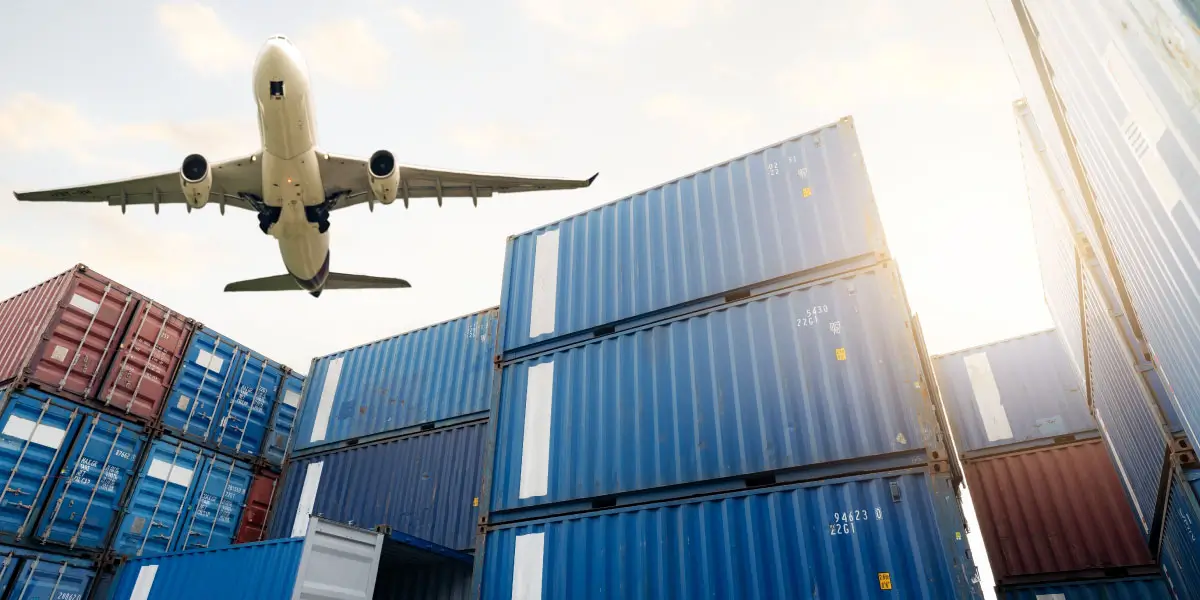
Picture a shipment that tells you exactly where it stands, its location, its condition, and ETA. Before your client even thinks to ask. From air cargo in the UAE to East African trade corridors, the shift toward air-first logistics strategies has been consistent across markets. That capability already exists. Modern air freight has come a long way from simply loading and hoping for the best. Today, it holds the most trackable, reliable link in any international supply chain. If data can move at the speed of thought, your cargo should too.
Across growing trade corridors, air freight services now connect markets with a consistency that sea and road freight genuinely struggle to match. Serious businesses stopped treating this as a nice-to-have a while back. At some point, it just became the baseline.
Speed and Operational Efficiency
Speed defines air freight. No other mode comes close when urgency drives the decision. Ocean freight runs in weeks. It runs in hours and days, which makes it the natural choice for perishable goods, pharmaceutical consignments, urgent documents, and high-demand products with tight replenishment windows. For companies running just-in-time inventory or responding to sudden demand spikes, that speed stops being a preference and becomes a structural need. Air freight services exist precisely for these situations, cutting out the extended lead times that sea and road transport bring with them, and getting cargo from origin to destination on the fastest available path.
Global Network and Market Reach
Modern air freight runs through a vast network of commercial and cargo airports. Major trade hubs connect to regional markets that surface transport struggles to reach efficiently. For businesses pushing into new territories or managing supply chains across multiple countries, that reach changes what’s operationally possible. International air freight removes the geographic constraints that ground-based logistics imposes. Remote destinations, landlocked markets, and underdeveloped road corridors all of them become reachable within commercially viable timeframes. For Satguru Cargo, operating across Dubai, Kigali, and the DRC means working across infrastructure environments that vary enormously. This mode provides a kind of consistency that road or sea transport simply cannot guarantee across all three.
Reliability and Schedule Adherence
Speed matters. So does consistency. Airline operations run on fixed schedules, regulated departure windows, and tight timetable adherence. That structure gives logistics teams something they cannot always get from sea freight. The confidence to plan downstream operations without building in large uncertainty buffers. Weather delays, port congestion, and vessel scheduling are genuine variables in ocean freight. Most of these variables simply don’t apply here. Multiple daily departures across major trade corridors also give shippers room to recover quickly if a consignment misses a flight. That frequency, combined with short transit times, puts air freight in a different reliability category for time-sensitive supply chains. For shippers who rely on air tracking to manage downstream planning, this schedule predictability is what makes real-time data actionable.
Air Freight and Supply Chain Continuity
Supply chain disruption rarely announces itself. A missed production deadline, a regulatory hold at customs, a supplier failure on the other side of the world. These scenarios land without warning. Air freight does not eliminate risk, but it dramatically compresses the recovery window. When disruption hits, the ability to move replacement stock or critical components within 24 to 48 hours is often the difference between a contained incident and a full operational breakdown.
This recovery speed matters most for manufacturers running lean production lines, retailers managing seasonal inventory, and healthcare organizations where supply gaps carry direct patient implications. In each case, air freight services function less as a primary logistics channel and more as a strategic continuity tool, the option that keeps the operation running when surface freight timelines cannot absorb the delay.
Building air freight capacity into a supply chain strategy, even for shipments that typically move by sea, gives procurement and logistics teams a credible fallback. Organizations that treat it as an emergency-only option tend to pay premium rates under pressure. Those that maintain active carrier relationships and pre-cleared documentation use it as a planned instrument of supply chain resilience.
Security Standards and Cargo Integrity
Air freight operates under some of the tightest security protocols in logistics. Regulated screening, controlled access environments, and strict handling standards at international airports collectively drive down the risk of theft, damage, and loss in transit. For high-value consignments of luxury goods, sensitive electronics, precision instruments, and pharmaceuticals, a security framework matters as much as speed when choosing a shipping mode. It also involves fewer handling touchpoints than multimodal surface shipping. Fewer transfers mean fewer opportunities for damage. For shippers moving fragile or expensive cargo, that reduced exposure has real financial weight behind it.
Inventory Optimisation and Warehousing Costs
Fast, reliable replenishment changes how companies manage stock. When goods arrive on a predictable, short cycle, businesses can operate with leaner inventory, freeing up capital that would otherwise sit on warehouse shelves. Air freight services support a demand-responsive model. Rather than building large safety stock to cover the uncertainty of long sea freight lead times, companies can reorder with confidence that the stock arrives within a defined window. Over time, that translates to lower storage costs, better working capital efficiency, and more agility when demand shifts. Faster replenishment cycles, in other words, have a direct effect on the balance sheet.
Choosing the Right Air Freight Partner
The quality of an air freight service is not determined by the aircraft. It is determined by the partner managing the process around it. Documentation errors, customs misclassifications, poor carrier selection, and inadequate handling instructions are all partner failures, not airline failures. For B2B shippers, selecting the right air freight provider is as operationally significant as the mode itself.
A capable airfreight partner brings three things that matter in practice. First, established carrier relationships that translate into competitive rates and priority capacity, particularly on high-demand corridors where space sells out fast. Second, in-house customs brokerage capability that handles documentation, tariff classification, and clearance without farming it out to a third party that introduces delay and communication gaps. Third, regional expertise in the specific corridors your business operates in. A provider with deep knowledge of trade routes, local regulations, and ground handling standards at destination airports is fundamentally different from one that books freight as a transaction.
For businesses shipping into or out of East Africa, the Gulf, where air cargo in UAE moves through one of the world’s busiest freight hubs, or emerging market corridors, this regional knowledge is a baseline requirement. Satguru Cargo operates directly across Dubai, Kigali, and the DRC, with established infrastructure at each point. That presence means fewer handoffs, faster exception resolution, and consistent service standards across regions that less experienced providers struggle to cover reliably.
Flexible Freight Solutions Across Cargo Types
Air Freight handles more than small, urgent parcels. Modern freight services cover a wide range of shipment profiles from express documents to large consolidated cargo loads. The cargo type does not need to fit a narrow template. Specialist handling extends that flexibility further. Temperature-controlled environments move pharmaceuticals, perishables, and biological samples safely. Oversized cargo handling accommodates industrial equipment and aerospace components. Dangerous goods certifications cover regulated materials with the compliance documentation they require. Businesses across healthcare, retail, manufacturing, and government sectors can structure their air freight needs around a single capable partner rather than managing a different provider for every cargo category.
Customs Clearance and Compliance Support
Cross-border air freight carries regulatory complexity that demands expertise and process discipline in equal measure. Documentation requirements, import duties, restricted commodity rules, and country-specific compliance obligations shift significantly across trade corridors. Errors in this process do not surface early. They surface at destination customs when the shipment has already arrived, and the delay costs are already running.
Experienced air freight providers handle customs brokerage as part of the service, managing documentation, tariff classification, and regulatory clearance on behalf of the shipper. For businesses new to a trade corridor or operating in markets where customs frameworks continue to evolve, that support removes a category of risk that in-house teams often lack the bandwidth to manage. Several of the East African markets Satguru Cargo serves directly fall into exactly this category.
Conclusion
Visibility, speed, and reliability, those three things decide whether a supply chain actually functions or just technically exists on paper. Air freight delivers on all three in ways that other modes still haven’t managed to close the gap on.
The businesses leaning into sharper logistics will keep pulling ahead, quietly, consistently. The ones still running on safety stock and gut feel? They’ll feel the pressure eventually. Build a supply chain that gives you real data, honest timelines, and confidence at every stage. That starts with choosing a freight model built to handle exactly this kind of demand.
FAQs
Q.1 What types of goods are suitable for air freight?
Ans: Air freight is suited to time-sensitive, high-value, or perishable goods, including electronics, pharmaceuticals, fresh produce, luxury items, and critical documents. Hazardous materials and certain restricted commodities are subject to separate regulations and carrier approval.
Q.2 How is airfreight cost calculated?
Ans: Air freight pricing is based on chargeable weight, which is the higher of actual weight or volumetric weight, combined with the origin-destination corridor and applicable surcharges, including fuel, security, and handling fees.
Q.3 What is airfreight tracking, and how does it work?
Ans: Air freight tracking provides real-time visibility into shipment status using unique consignment references tied to the air waybill. Shippers can monitor cargo movement from acceptance at origin through customs clearance to final delivery.
Q.4 What documentation is required for international air freight?
Ans: Standard documentation includes the air waybill (AWB), commercial invoice, packing list, and any applicable export or import licenses. Country-specific requirements may include certificates of origin, phytosanitary certificates, or customs declarations.
Q.5 How does air cargo in the UAE compare to other regional hubs?
Ans: The UAE benefits from world-class airport infrastructure, high cargo throughput, efficient customs procedures, and direct connectivity to over 200 destinations. It consistently ranks among the top global air cargo hubs and serves as a critical transit point for trade between Asia, Africa, and Europe.
Q.6 Are there restrictions on what can be shipped via air freight services?
Ans: Yes. Prohibited and restricted items vary by airline and destination country but typically include flammable substances, certain biological materials, undeclared lithium batteries, and specific food categories. Shippers should verify restrictions with their freight provider before booking.